
Having good attendance remains extremely important for your child. We recognise the importance of recognising the key symptoms of Coronavirus and acting as set out in the guide below.
For other common childhood illness such as a cold with runny nose, our expectation is your child will attend school. If you are unsure at all, call the school number to discuss. You must call on the morning of an absence by 9:15am.
Guide to help parents to make decisions about who should isolate
Any questions please ring the school office on 0151 263 5976.
Over a weekend you can email [email protected] with your queries and a telephone number and we will get back to you.
I’ve been told to self-isolate. What do I need to do?
You need to isolate because you have either received a positive COVID-19 test result or you have been in contact with someone who has received a positive COVID-19 test result.
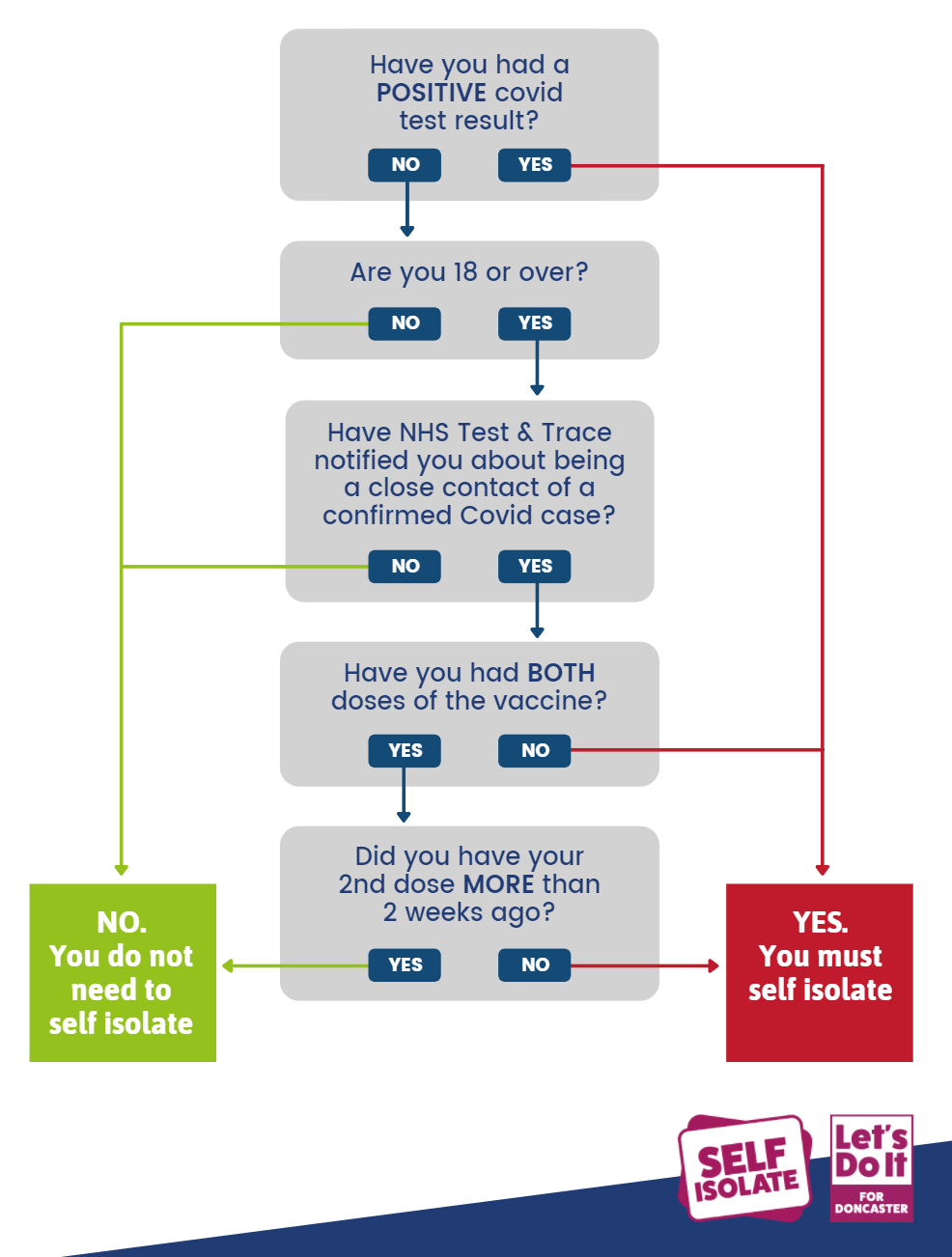
Your 10-day self-isolation will start after:
If you have tested positive for Covid-19, your 10 day self-isolation will start:
- The day that your symptoms started – if you had any
- The day you tested positive if you did not have any symptoms
If you have been told you are a close contact of somebody who is positive for Covid-19, your 10 day self-isolation will start:
- The day you were last in contact with the person who tested positive for Covid-19 – you will be told this by NHS Test and Trace via a phone call, text or on the NHS Covid-19 App
If you live with somebody who has tested positive:
- The person who tests positive should isolate for 10 days and:
- Stay in a room away from the rest of the household
- Use a separate bathroom where possible (if a shared bathroom is used, clean after each use) and use their own towels
- Use the kitchen when no one else is using it, eat in their own room and wash their own dishes
- Wash hands regularly
- Open windows
Others in the house, who are over 18 and not fully vaccinated, need to:
- Self isolate at home for 10 days (EVEN if they have a negative test result – this is for the safety of others!)
- Keep separate from the person who tested positive
- If you have to share spaces do everything possible to minimise the time together, wear a face mask and keep 2 metres apart
- Wash hands regularly
Others in the house who are fully vaccinated (have had both doses) or are under 18:
- Do not need to self-isolate
- Get a PCR test by calling 119 or visiting nhs.uk/coronavirus. If this is positive you will need to self-isolate for 10 days
- If it is negative but you go on to develop symptoms, you must self-isolate immediately and get another PCR test
Why is self-isolation important?
- Protect others
- Stop the Spread
- Reduce chances of more variants
- Keep hospital admissions low
We know that people can have COVID-19 without having symptoms and this means that they can also pass on the virus.
If you have been in close contact with someone who has the virus it could take up to 10 days for your own symptoms to appear.
You could give the virus to other people, including those who are vulnerable to very serious illness.
By self-isolating, you are not only protecting your friends, family and community but you are also helping to make sure that those most vulnerable to very serious illness are not exposed to the virus by you.
Remember, if you are asked to self-isolate, you must do so by law.
 You must not leave your home if you are self-isolating.
 You could be fined if you do not self-isolate.
What self isolation means:
Do not go to work, school, college, or public places
Do not go on the bus, train or use taxis
Do not pop out to the supermarket to get food and medicine
Do not just nip to the shops to get a birthday card, present or other items or calling at the hospital to drop things off
Do not have visitors in your home – this includes friends and family (you could be exposing them to the virus). The only people allowed in your home are those providing essential care
Do not go out to exercise unless within your own private garden – this means no trips to the gym, pool or for a jog or cycle, no walking the dog!
